 Customer Support


Posts by Category
07/08/2026
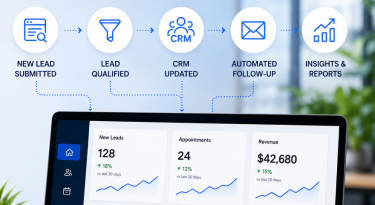
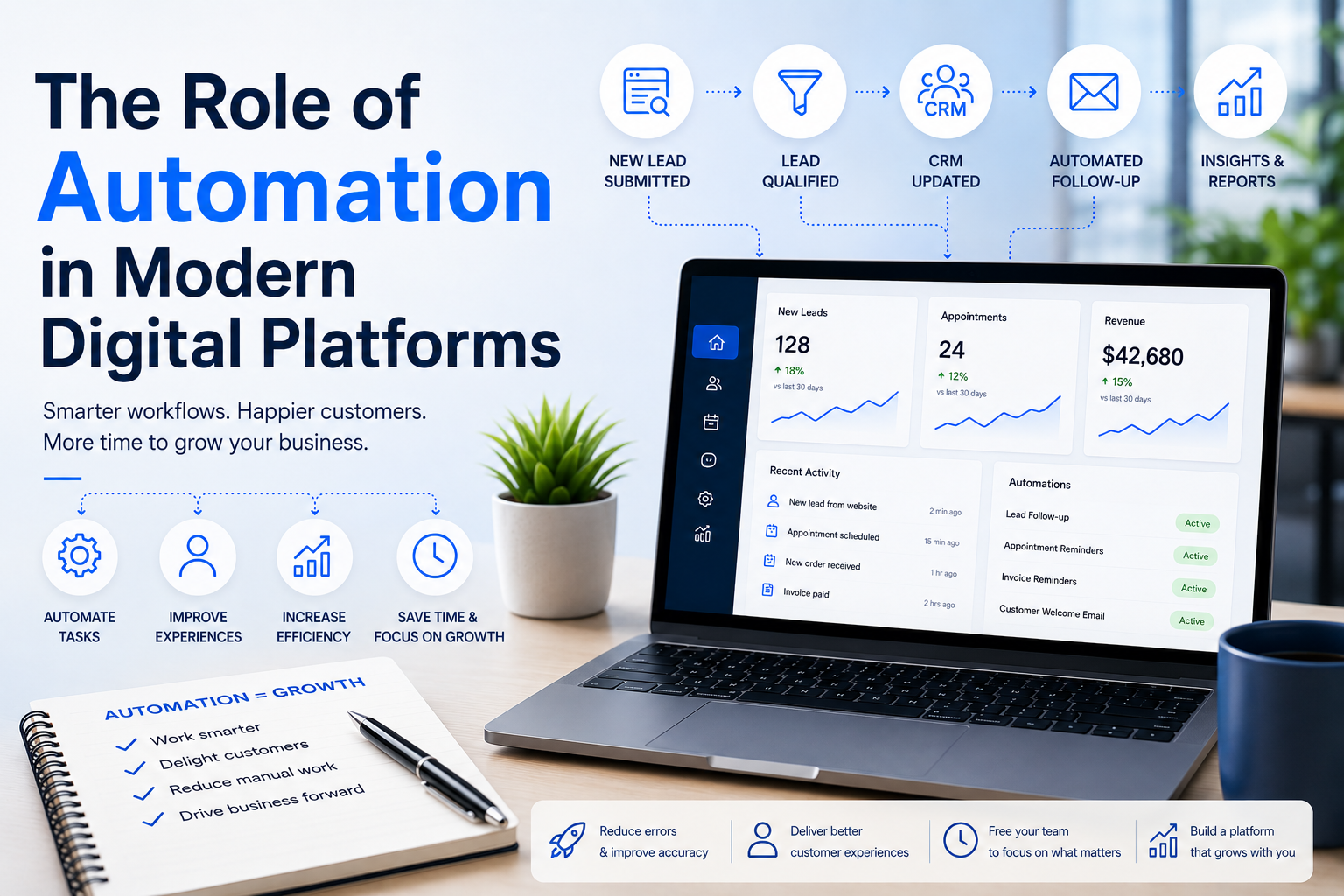 Automation in digital platforms helps businesses eliminate repetitive tasks, streamline workflows, and improve customer experiences. If you're like most business owners, you've probably caught yourself thinking,
"There has to be a better way to do this."
Automation in digital platforms helps businesses eliminate repetitive tasks, streamline workflows, and improve customer experiences. If you're like most business owners, you've probably caught yourself thinking,
"There has to be a better way to do this."Maybe your team spends hours responding to the same inquiries every week. Maybe leads come through your website, but someone still has to copy them into your CRM. Or perhaps customers are calling because they can't find the information they need online.
These aren't just everyday frustrations. They're signs that your website isn't working as hard as your business is. That is where automation in digital platforms makes a real difference.
Today's website shouldn't simply look good. It should help your business run more efficiently, reduce repetitive work, improve customer experiences, and give your team more time to focus on what matters most. Modern businesses are investing in smarter digital tools that support long-term growth through intelligent automation.
At Dreaming Code, we've seen firsthand how the right combination of technology, intelligent workflows, and thoughtful design transforms an underperforming website into a true business platform.
Why Traditional Websites Are Holding Businesses Back
Many small and medium-sized businesses still operate websites that were built several years ago.They may have looked great when they launched, but today's business challenges are very different.
- Customers expect immediate responses.
- Employees expect systems that communicate with one another.
- Business owners want visibility without juggling spreadsheets or disconnected software.
A visitor submits a form. Someone receives an email. Another employee enters the information into a CRM. Sales follows up manually. Marketing sends another email later.
Before long, several people have touched the same information multiple times.
Not only is this inefficient, but it also increases the likelihood of mistakes and delays.
One of the strongest buying signals we see is a company saying, "Everything is manual." That usually means there is a tremendous opportunity to improve efficiency through smarter technology and automation.
What Does Automation in Digital Platforms Really Mean?
When people hear the word automation, they often picture robots replacing employees. In reality, it's much simpler.Automation in digital platforms means allowing technology to handle repetitive tasks that don't require human decision-making.
Instead of spending valuable time copying information between systems, sending routine emails, updating spreadsheets, or managing appointments manually, those processes happen automatically.
Your employees spend less time on administration and more time helping customers, solving problems, and growing the business.
This isn't about replacing people. It's about giving your team better tools so they can focus on work that creates value.
Businesses that embrace automation in digital platforms automation often discover they can accomplish significantly more without adding additional staff.
Everyday Examples of Business Automation
Many business owners are surprised by how much of their daily work can be automated.Example 1: Dental Practice Automation
Imagine a dental practice. A patient books an appointment online.Instead of someone manually confirming the appointment, the website automatically:
- Confirms the booking
- Updates the calendar
- Creates a patient record
- Sends appointment reminders
- Delivers intake forms before the visit
Example 2: Manufacturing Quote Request Automation
Now consider a manufacturing company. A distributor requests a quote through the website.Instead of forwarding emails between departments, the website automatically:
- Routes the request to the correct sales representative
- Creates a CRM opportunity
- Assigns follow-up tasks
- Sends confirmation to the customer
Customers receive faster service. Employees save time. The business operates more efficiently.
How Workflow Automation Improves Digital Platforms
One of the biggest misconceptions is that automation only reduces administrative work. The truth is that a modern workflow automation website improves the entire customer experience.Customers expect answers immediately. They want to schedule appointments online. They want updates without making phone calls. They expect personalized experiences.
Automation makes these interactions feel seamless.
For example:
- Online forms automatically qualify leads.
- Live chat answers common questions.
- Customer portals display account information.
- Payment reminders are sent automatically.
- Marketing campaigns adjust based on customer behavior.
Connecting CRM, ERP, and Digital Platforms with Automation
Automation becomes even more powerful when business systems communicate with one another.Many SMBs operate several disconnected applications. Nothing talks to anything else. As businesses grow, these disconnected systems create unnecessary work.
That is why integration matters.
Connecting your website with your CRM, ERP, scheduling software, payment systems, and marketing tools creates a seamless flow of information that eliminates duplicate work and improves accuracy.
Dreaming Code specializes in helping businesses connect these systems so information flows automatically instead of requiring manual entry.
When systems communicate, everyone benefits.
- Employees work faster.
- Customers receive quicker responses.
- Management gains better visibility into business performance.
How AI Improves Automation in Digital Platforms
Automation has evolved considerably over the last few years.Modern AI is transforming automation in digital platforms by allowing businesses to:
- Answer customer questions
- Personalize website experiences
- Summarize conversations
- Qualify leads
- Route requests automatically
This is especially valuable for small and medium-sized businesses that don't have large customer service teams.
Automation Supports Digital Transformation for SMBs
Digital transformation isn't reserved for large enterprises anymore.In fact, many small and medium-sized businesses have the most to gain.
Successful digital transformation SMB initiatives often begin with improving the website because it touches nearly every customer interaction.
Think about everything your website already influences:
- Marketing
- Sales
- Customer service
- Recruiting
- Scheduling
- Payments
- Communications
That is why more businesses are moving toward a modern digital experience platform instead of managing disconnected tools individually.
A unified platform allows your website, automation, integrations, and customer experience to work together rather than operating as separate systems.
Why Ongoing Support Matters for Automated Digital Platforms
Launching automation isn't the finish line.Your business will continue evolving. You'll introduce new products, expand into new markets, and adopt new software.
Your website should evolve alongside those changes.
That is why Dreaming Code combines modern automation with ongoing management and Radical Support.
Instead of waiting until something breaks, our team continuously monitors, improves, secures, and optimizes your digital platform so it continues delivering value as your business grows.
Small Automation Improvements Deliver Big Business Results
Business owners often assume automation requires a massive digital transformation project. It usually doesn't.Sometimes the biggest wins come from solving small problems.
- Automating appointment reminders
- Routing leads automatically
- Connecting your CRM
- Simplifying online forms
- Sending follow-up emails without manual effort
Before long, your employees are spending less time managing systems and more time growing the business.
That's the real value of automation in digital platforms.
Whether you're modernizing an outdated website or looking for ways to improve operational efficiency, Dreaming Code helps businesses build digital platforms that are designed to grow with them.
If your website feels more like another job than a business asset, it may be time to rethink what it's capable of.
Ready to Put Your Website to Work?
Your website should do more than attract visitors. It should help your business operate more efficiently every single day.Dreaming Code combines modern websites, automation, AI, integrations, and ongoing management into one fully managed platform that grows with your business.
Whether you're beginning your digital transformation or looking to improve an existing website, we'd love to show you what's possible.
Ready to see what's possible?
Frequently Asked Questions
What is automation in digital platforms?
Automation on digital platforms uses technology to perform repetitive tasks. It helps businesses streamline processes such as lead routing, appointment scheduling, customer communications, and data synchronization between systems.How can automation improve my website?
Automation transforms your website from a static marketing tool into an active business asset. It can automatically capture leads, send follow-up emails, qualify prospects, schedule appointments, and connect with your CRM or ERP, reducing manual work while improving customer experience.What types of businesses benefit most from automation?
Almost any growing business can benefit, especially companies with manual processes, disconnected systems, or limited internal resources. Manufacturers, medical and dental practices, real estate firms, retailers, professional services, and nonprofit organizations often see significant improvements in efficiency and customer engagement.Do I need to replace my existing business systems?
Not necessarily. In many cases, automation can connect your existing CRM, ERP, accounting software, scheduling tools, and marketing platforms into a single, streamlined workflow. The goal is to make your current technology work together more effectively.Why choose Dreaming Code for website automation?
Dreaming Code delivers more than individual automation tools. We design, build, host, manage, and continuously optimize digital platforms that combine automation, AI, integrations, security, and ongoing support to help businesses grow with confidence.
06/30/2026
 If your website hasn't been touched in years, you're in good company. A lot of small and medium-sized businesses are still running on sites that were built once, launched, and then largely left alone. They might look fine on the surface, but under the hood they're often quietly generating extra work, higher costs, security gaps, and missed opportunities.
Customer expectations have shifted, though. A website functions more like an operating system for the business, one that has to attract customers, generate leads, support day-to-day operations, and build trust all at once.
That shift is why more companies are moving away from the old build-it-once model and toward a managed website platform instead. A fully managed setup takes the burden of upkeep off the business and, in the process, tends to improve performance, security, and the ability to scale.
At Dreaming Code, we see this pattern play out constantly. Owners want a modern setup that lets them focus on running their business rather than babysitting technology.
What Is a Traditional Website?
A traditional site is usually built as a one-off project. A company hires a designer or an agency, the site goes live, and everyone assumes it will keep humming along for years without much attention.Under the hood, these builds typically combine front-end technology — HTML, CSS, JavaScript, often paired with a framework like React, Angular, or Vue — with a content management system such as WordPress or Drupal, plus a custom back end that handles content, data, and business logic. That flexibility comes at a price: the result is usually a patchwork of separate technologies, hosting environments, plugins, integrations, and vendors, each of which needs its own upkeep. As the site grows, keeping everything updated, secure, fast, and functional gets harder and more expensive, especially for a company without in-house technical staff.
This approach wasn't built for the kind of always-on digital infrastructure companies now rely on. Sites like this tend to share a familiar set of traits: hosting split across different providers, a stack of third-party plugins, updates that only happen manually, thin support, growing security holes, performance that degrades over time, and content that goes stale because nobody has the bandwidth to touch it.
Business owners often find that every change needs a developer, every new feature turns into its own project, and every problem shows up as a surprise bill. Little by little, the site falls behind.
The Hidden Costs of Traditional Websites
The sticker price on a traditional build can look appealing at first glance. What gets missed is everything required to keep it running afterward including hosting fees, security software, plugin licenses, emergency fixes, eventual redesigns, performance tuning, and SEO cleanup, to name the usual suspects.A manufacturer, for instance, might spend thousands a year just maintaining the connection between its website and its ERP system. A dental practice might discover that adding online scheduling isn't a quick tweak but a costly rebuild. What began as a simple site quietly turns into a pile of disconnected tools, each demanding its own attention.
What Is a Managed Website Platform?
A managed platform starts from a different premise. Rather than treating the website as something you build once and forget, it treats it as an ongoing part of the business with design and development, hosting, security, maintenance, performance monitoring, SEO, content management, technical support, and system integrations, all handled together.Instead of juggling several vendors, a business works with one partner accountable for the whole digital experience. That single point of ownership tends to produce more consistency and better outcomes over time. It's the reasoning behind Dreaming Code's managed digital experience platform, which folds all of these services into one coordinated solution.
How a Managed Platform Supports Growth
A managed platform isn't just about keeping the lights on but it's meant to actively support growth. Instead of scrambling to fix problems as they surface, a business can get ahead of them: improving the customer experience, tuning performance, and rolling out new capabilities as needs change. That matters most for small and mid-sized companies that don't have an internal IT team to lean on.Comparing the Two Head to Head
On the management side, the difference is stark. A traditional setup usually means multiple vendors, maintenance that only kicks in after something breaks, updates done by hand, and accountability that's hard to pin down. A managed platform replaces that with one point of contact, upkeep that happens before problems appear, continuous improvement, and clear ownership. For a lot of owners, that shift alone is worth the switch.Security tells a similar story. Older sites tend to lean on outdated plugins and software nobody's watching closely, which is exactly how vulnerabilities and slowdowns creep in. A managed platform folds in continuous updates, monitoring, backups, and optimization, so the site stays secure and responsive without anyone having to remember to check on it.
Scalability is where the gap really shows. A site built as a one-time project tends to resist change. Adding features like appointment scheduling, CRM integration, customer portals, or marketing automation usually means a fresh development project and a fresh invoice. A platform built to be managed can absorb that kind of growth without requiring a rebuild.
Then there's the support problem, which might be the most frustrating part for owners: the hosting company blames the developer, the developer blames the plugin, the plugin vendor blames the server however and the business is stuck waiting in the middle. Dreaming Code built its Radical Support service specifically to short-circuit that cycle, catching issues before they turn into fire drills rather than reacting once something's already broken.
A Manufacturing Example
Picture a manufacturer that sells through both distributors and direct customers. On a traditional site, quotes might have to be requested manually, the catalog might be out of sync with reality, there's no link to the ERP system, and staff end up doing the same data entry twice. A managed platform can connect straight into the ERP, personalize the experience for each customer type, route leads automatically, sharpen search visibility, and make content updates simple. Dreaming Code works through exactly these kinds of problems regularly enabling ERP integrations, EDI connections, customer-specific pricing, dropshipping workflows, automated order management so the website ends up supporting operations instead of adding to the workload.Why the Shift Is Happening
Customers now expect fast load times, a smooth mobile experience, easy navigation, content that feels personalized, secure interactions, and consistent communication with a site built as a one-time project that usually struggles to keep up on all fronts at once. A managed digital experience platform supplies the infrastructure, flexibility, and support needed to compete on those terms, and it gives a business room to grow into whatever the goal, lead generation, deeper customer engagement, scheduling, content marketing, or expanding into eCommerce. More companies are turning to a modern digital experience platform for exactly this reason: it cuts down technical debt while lifting both marketing results and the overall user experience.Signs It's Time for an Upgrade
A few warning signs tend to show up together: the site is more than three years old, updates are slow or expensive, several vendors each own a piece of it, performance is inconsistent, security concerns keep surfacing, leads have plateaued, and there's little visibility into how the site is actually performing. If more than a couple of those sound familiar, it's probably worth a closer look at a managed alternative.Ready for a Better Website Experience?
If your site feels outdated, hard to manage, or unable to keep up with where the business is headed, it may be time to look at a managed alternative. Dreaming Code helps companies retire outdated sites in favor of a fully managed solution — design, hosting, support, SEO, integrations, and ongoing optimization, all in one place.Through our managed digital experience platform, businesses get a partner focused on long-term growth instead of a one-off project. Book a Demo to see how Dreaming Code can help reshape your digital presence.
Frequently Asked Questions
What is a managed website platform?
It's a fully supported website solution — hosting, maintenance, security, updates, support, and ongoing optimization — all handled by one provider.How does it differ from a traditional website?
A traditional site is usually delivered once and left alone. A managed platform keeps managing, supporting, and improving the site over time.Is it more expensive?
Not necessarily. There's often a monthly cost, but many businesses end up saving once they factor in what they'd otherwise spend on maintenance, emergency fixes, security incidents, and eventual redesigns.Which businesses benefit most?
Small and mid-sized companies without a dedicated web or IT team tend to see the biggest difference.Where can I learn more?
Check out Dreaming Code's FAQs page, or book a consultation to talk through your specific situation.
05/20/2026
 If you're a business owner looking at your website and thinking,
“This should be doing more," you're probably right.
If you're a business owner looking at your website and thinking,
“This should be doing more," you're probably right.
Most SMB websites don't fail because of design. They fail because they're disconnected. They don't integrate with the rest of the business. They don't automate anything. And they definitely don't evolve.
That's where a managed digital experience platform changes everything.
Let's walk through what it actually is and why more companies are moving in this direction.
What Is a Managed Digital Experience Platform?
A managed digital experience platform is a fully managed system that combines your website, integrations, automation, hosting, and ongoing support into one connected solution.Instead of juggling multiple vendors and tools, everything lives in one place and works together.
Your website becomes more than a marketing tool. It becomes part of how your business operates.
With a modern platform, you get:
- A high-performing digital experience platform
- Built-in integrations with CRM, ERP, and scheduling tools
- Automation for lead capture and workflows
- Hosting, security, and performance handled for you
- Ongoing updates and improvements
How a Managed Digital Experience Platform Actually Works
Let's simplify this.Most SMBs operate with disconnected tools. A website here. A CRM there. Scheduling somewhere else. It works, but it creates friction.
A managed digital experience platform brings everything together.
One Connected System
Your content, customer data, and workflows are all tied together.
A visitor fills out a form. That data flows into your CRM. A follow-up gets triggered automatically. If they book a meeting, it's already synced.
No manual work. No dropped leads.
Automation That Saves Time
This is where the real value shows up.
Instead of handling tasks manually, the platform automates:
- Lead routing and notifications
- Appointment scheduling
- Order processing
- Customer communication
Fully Managed from Day One
You're not left figuring things out.
A managed website platform includes hosting, updates, security, and ongoing optimization. With Dreaming Code, that also means access to Radical Support so your site keeps improving over time.
Why SMB Websites Underperform and How This Fixes It
If your site isn't delivering results, it's usually not a content issue. It's a system issue.Here's what a managed digital experience platform solves.
Your Website Starts Driving Growth
Instead of just sitting there, your site:
- Captures leads
- Guides visitors toward action
- Connects directly to your systems
- Automates follow-ups
You Eliminate Manual Work
Many SMBs spend hours on repetitive tasks.
Entering data. Following up. Managing bookings.
A digital platform for SMBs removes much of that work so your team can focus on higher-value activities.
Your Systems Finally Talk to Each Other
Disconnected tools create delays and errors.
A digital experience platform for businesses connects everything so data flows naturally between systems.
That's where efficiency comes from.
You Simplify Your Vendor Stack
Instead of dealing with multiple vendors, you work with one partner.
One platform. One team. One place to go when something needs to change.
Real-World Examples
B2B Distributor with Manual OrdersA distributor was managing pricing and orders manually.
After moving to a managed digital experience platform:
- Customers log in to see custom pricing
- Orders sync directly with backend systems
- Sales reps use a digital portal
Medical Practice with Scheduling Challenges
A clinic relied on phone calls and paperwork.
After adopting a managed website platform:
- Patients book online
- Intake forms are digital
- Automated reminders reduce no-shows
Service Business Needing Better Leads
A local service company had traffic but low conversion.
After implementing a digital platform for SMBs:
- Leads are captured instantly
- Follow-ups are automated
- Performance is tracked clearly
Why Dreaming Code Is Built for This
Dreaming Code is designed for SMBs that need more than a basic website but don't want to manage a complex tech stack.- Fully managed platform from design to hosting
- Deep integrations with tools like Sage and Salesforce
- Built for digital experiences and commerce
- Continuous optimization and support
- A true partner approach
Final Thoughts
A managed digital experience platform is not just a better website. It's a better system for running your digital business.Less manual work. More automation. More clarity.
If your current setup feels stuck, this is usually the next step.
If you want to see how it works for your business, you can book a demo and explore it firsthand.

11/20/2024
Why LinkedIn is important for B2B Lead Generation
LinkedIn's unique positioning as a professional networking site makes it an ideal platform for B2B marketing. According to LinkedIn, four out of five members drive business decisions, providing a direct line to the decision-makers you want to reach. The platform's robust targeting capabilities allow businesses to tailor their content and advertisements to specific audiences based on job title, industry, company size, and more. This precise targeting, combined with LinkedIn's professional environment, helps build trust and credibility, which is essential for successful B2B marketing.Checklist for optimizing Your LinkedIn Company Page
- High-Quality Profile & Banner Images: First impressions matter. Ensure your profile picture (usually your company logo) and banner image are high-quality and visually appealing. This helps attract visitors and establish a professional image.
- Compelling "About Us" Section: Write a persuasive and keyword-rich "About Us" section. This should convey who you are, what you offer, your values, and how to contact you. Including relevant keywords will improve your visibility in LinkedIn search results.
- Share Unique and Valuable Content: Regularly post informative, engaging, and relevant content to your industry. This can include company updates, industry news, thought leadership articles, and employee highlights. High-quality content helps establish your brand as a thought leader and keeps your audience engaged.
- Grow Your Audience: Use LinkedIn's features to expand your reach. Invite first-degree connections to follow your page, use targeted posts, and leverage hashtags to increase visibility. Consider paid promotions to extend your reach further.
- Build a Career Page: A dedicated career page can attract potential employees and showcase your company culture. This is particularly useful for businesses looking to grow their team and attract top talent.
- Join and Engage in Groups: Participate in LinkedIn Groups relevant to your industry. This will help you build your authority and connect with potential leads organically.
Conclusion
Optimizing your LinkedIn company page is a strategic move for enhancing B2B lead generation. By focusing on high-quality visuals, compelling content, and active engagement, you can build a strong brand presence and connect with key decision-makers. Remember, every interaction on LinkedIn is an opportunity to build relationships and generate leads. Incorporate these practices as part of your overall marketing strategy, and leverage platforms like Dreamingcode to ensure 24/7 support for your digital marketing efforts.DreamingCode is a partner who can drive your digital success. We provide an industry-leading platform to enable agile and flexible digital experiences. We have solutions tailored to your needs if you seek advice on driving website traffic and user experience. Our solution consultants are eager to support you in planning, building, and scaling your digital transformation. Schedule to meet us today!

09/19/2024

Instagram Reels marketing has become one of the most effective ways for small and medium-sized businesses (SMBs) to reach new audiences, increase engagement, and build brand awareness. With Instagram prioritizing short-form video content, businesses that leverage Reels strategically can improve their visibility, connect with potential customers, and drive meaningful business growth.
Whether you're just starting with Instagram Reels or looking to improve your existing strategy, these best practices will help you maximize your marketing efforts.
Why Instagram Reels Marketing Matters for Small Businesses
Instagram Reels marketing allows SMBs to showcase their products, services, and brand personality through engaging short-form videos. Since Reels are promoted across the Explore page and Instagram's recommendation engine, businesses can reach users beyond their existing followers.Benefits of Instagram Reels Marketing
- Increase organic reach and discoverability
- Improve audience engagement
- Build brand awareness
- Showcase products and services creatively
- Generate leads and website traffic
- Strengthen customer relationships
1. Showcase Your Brand Personality
One of the biggest advantages of Instagram Reels marketing is the ability to humanize your brand.Consumers connect with authentic businesses rather than polished advertisements. Use Reels to highlight:
- Behind-the-scenes moments
- Employee introductions
- Office culture
- Customer success stories
- Company milestones
- Funny or relatable moments
Pro Tip
Authentic videos often outperform highly produced promotional content because they feel more genuine and relatable.2. Create Short, Engaging Videos
Successful Instagram Reels marketing focuses on capturing attention within the first few seconds.Keep your videos:
- 15–30 seconds long
- Fast-paced
- Visually engaging
- Easy to understand without sound
- Focused on one key message
Best Practices
- Use vertical video (9:16)
- Include text overlays
- Add a strong call-to-action
- Use high-quality visuals
- Maintain consistent branding
3. Leverage Trending Audio and Hashtags
Trending sounds and hashtags are powerful tools in Instagram Reels marketing.Instagram often promotes Reels using trending audio, helping businesses reach audiences who may not already follow them.
Use Trending Content Wisely
- Monitor trending audio weekly
- Participate in relevant challenges
- Use niche-specific hashtags
- Combine business trending and branded hashtags
- Stay relevant to your industry
4. Educate Your Audience with Valuable Content
Not every Reel needs to be promotional.Educational content consistently performs well because it provides immediate value.
Examples include:
Quick Tips
- Marketing tips
- Productivity hacks
- Industry insights
Product Demonstrations
Show how your product solves customer problems.Frequently Asked Questions
Answer common customer questions in under 30 seconds.Before-and-After Results
Visual transformations capture attention and encourage engagement.Educational Reels position your business as an industry expert while building trust with potential customers.
5. Cross-Promote Your Instagram Reels
Don't limit your content to Instagram alone.Repurpose your Reels across multiple platforms:
- Facebook Reels
- YouTube Shorts
- TikTok
- Pinterest Idea Pins
6. Maintain a Consistent Posting Schedule
Consistency is essential for successful Instagram Reels marketing.Posting regularly signals activity to Instagram's algorithm and helps keep your audience engaged.
Recommended Posting Frequency
- 3–5 Reels per week
- Daily Stories
- Weekly Carousel posts
- Monthly performance review
7. Analyze Your Instagram Reels Performance
Data drive the best Instagram Reels marketing strategies.Track important metrics such as:
- Reach
- Views
- Watch time
- Saves
- Shares
- Comments
- Profile visits
- Website clicks
Partner with Dreaming Code for Better Instagram Reels Marketing
Managing a successful Instagram presence takes time, creativity, and consistency.Dreaming Code helps businesses develop effective social media marketing strategies, create engaging content, and improve online visibility. Our team can help you build a content plan that supports your business goals while allowing you to focus on serving your customers.
Conclusion
Instagram Reels marketing has transformed how small businesses connect with their audiences. By creating authentic content, following trends strategically, educating your audience, and consistently publishing engaging Reels, SMBs can significantly improve brand awareness and customer engagement.As Instagram continues to prioritize short-form video, businesses that invest in a strong Instagram Reels marketing strategy today will be better positioned for long-term digital growth.
If you're ready to strengthen your social media presence, Dreaming Code can help you plan, create, and optimize Instagram Reels that deliver measurable results.
Frequently Asked Questions (FAQs)
What is Instagram Reels marketing?
Instagram Reels marketing is the practice of using short-form videos on Instagram to promote products, services, and brand awareness. Businesses use Reels to increase engagement, reach new audiences, and drive customer actions.Why is Instagram Reels marketing important for small businesses?
Instagram Reels marketing helps small businesses increase visibility, build stronger customer relationships, improve engagement, and attract new followers without relying solely on paid advertising.How often should businesses post Instagram Reels?
Most experts recommend posting 3 to 5 Instagram Reels per week to maintain consistent audience engagement and improve organic reach.What types of content perform best in Instagram Reels marketing?
High-performing Reels include:- Behind-the-scenes videos
- Product demonstrations
- Educational tips
- Customer testimonials
- Industry insights
- Trending challenges
- Quick tutorials
How long should an Instagram Reel be?
Although Instagram allows longer videos, Reels between 15 and 30 seconds generally perform best because they retain viewers' attention and encourage repeat views.Can Instagram Reels marketing help increase sales?
Yes. Effective Instagram Reels marketing can drive website traffic, generate leads, improve brand trust, and influence purchasing decisions by showcasing products in an engaging format.
07/18/2024

In today's digital landscape, social media has become an indispensable tool for businesses to connect with their target audience, build brand awareness, and drive website traffic. However, more than simply having a social media presence is required. To truly optimize social media to drive website traffic, it's crucial to understand the impact of your efforts.
By analyzing the right metrics, you can gain valuable insights into the effectiveness of your social media strategy and make data-driven decisions to improve performance.
Getting the Setup Right to Optimize Social Media to Drive Website Traffic
To effectively optimize social media to drive website traffic, you need the right analytics setup and tracking mechanisms in place.- Set Up Website Analytics - Implement a web analytics tool like Google Analytics to track and analyze your website traffic. This provides valuable insights into traffic sources, including social media referrals.
-
Track Social Media Referrals - Within your analytics platform, identify which social media channels are driving traffic. This helps determine the most effective platforms for your business.
-
Analyze Engagement Metrics - Monitor engagement metrics such as likes, shares, comments, and clicks. These indicators reveal what content resonates with your audience and encourages visits to your website.
-
Conduct Campaign Tracking - Use UTM parameters or campaign tracking links for specific campaigns. This helps measure performance and refine future strategies.
- Correlate Social Activity with Website Traffic - Identify patterns between your social media activity and website traffic spikes or drops. This helps you refine strategies and improve results.
Tips to Optimize Social Media to Drive Website Traffic
While tracking performance is essential, implementing the right strategies is key to converting impressions into actual visits.- Create Compelling Content - Develop high-quality content such as blogs, videos, and infographics that provide value and encourage users to click through to your website.
-
Optimize for Social Sharing - Make content easy to share by adding social sharing buttons and using engaging headlines, visuals, and descriptions.
- Leverage Influencer Marketing- Partner with influencers or industry experts to expand your reach and attract more visitors to your website.
- Run Contests and Giveaways - Encourage users to visit your website by offering incentives like discounts, free products, or exclusive content.
- Utilize Paid Social Media Advertising - Combine organic efforts with paid ads on platforms like Facebook, Instagram, and Twitter to target specific audiences and drive qualified traffic.
- Engage with Your Audience - Actively interact with your followers by responding to comments and building relationships. Engagement builds trust and encourages website visits.
Conclusion
To successfully optimize social media to drive website traffic, businesses must combine strategy, analytics, and consistent engagement. By continuously analyzing performance and refining your approach, you can maximize the return on your social media investment.Dreaming Code Inc. is a trusted partner in driving digital success. With industry-leading solutions and monthly content services, we help businesses plan, build, and scale their digital transformation effectively.

05/01/2024
Sales & Marketing

In the competitive realm of real estate, where first impressions matter, leveraging content marketing is a strategic way for online real estate companies to engage and convert their audience. With a little adaptation, these ideas work for both consumer and commercial real estate companies. The key to success is creating valuable, relevant, and compelling content that resonates with potential buyers and sellers.
Dreaming Code has experience building traffic and nurturing audiences for some of the most esteemed real estate businesses.
A guide to turning clicks into closings with real estate content marketing.
1. Engaging Blog Posts:
Craft blog posts that provide valuable insights into the local real estate market, offer tips for buyers and sellers, and showcase success stories. Address common questions and concerns, and use a conversational tone to connect with your audience.
2. Stunning Visuals:
Utilize high-quality images, virtual tours, and videos to showcase properties. Visual content is powerful in the real estate industry, allowing potential buyers to virtually explore homes and get a feel for the properties you represent.3. Informative Neighborhood Guides:
Create comprehensive guides to the neighborhoods you serve. Include information about schools, amenities, local attractions, and market trends. Positioning yourself as a local expert builds trust and credibility among potential clients.4. Interactive Content:
Incorporate interactive elements such as quizzes, calculators, or virtual staging tools. Interactive content engages visitors and provides them with personalized experiences, enhancing their connection with your brand.5. Social Media Engagement:
Leverage social media platforms to share your content and engage with your audience. Use platforms like Instagram and Facebook to showcase property highlights, share real-time updates, and participate in conversations within the community.6. Educational Resources:
Offer educational resources such as eBooks, webinars, or guides on various aspects of real estate. It positions your company as a knowledgeable resource and provides added value to your audience.7. Client Testimonials and Success Stories:
Feature client testimonials and success stories on your website. Real-life experiences build trust and credibility, demonstrating your ability to deliver results and fostering a sense of community around your brand.Conclusion
Content marketing serves as a bridge between clicks and closings in the real estate industry. Engaging blog posts, stunning visuals, informative neighborhood guides, interactive content, social media engagement, educational resources, and client testimonials collectively contribute to a robust content strategy. By consistently providing valuable and relevant content, real estate companies can build a loyal audience, establish authority in the market, and ultimately turn online engagement into successful real estate transactions. A well-executed content marketing blueprint is essential for real estate success as the digital landscape evolves.Dreaming Code Inc. is a partner who can drive your digital success. We provide an industry-leading platform to enable agile and flexible digital experiences. We also offer monthly content services to help you succeed in moving the performance of your digital solution. Our solution consultants are eager to support you in planning, building, and scaling your digital transformation. Schedule to meet us today!

05/01/2024
Sales & Marketing

With everything going digital, an online presence is indispensable for medical and dental practices looking to connect with patients and build a reputable brand. Content marketing plays a pivotal role in achieving these goals by driving traffic and fostering trust and engagement. Here's a comprehensive guide on harnessing the power of content marketing and design strategies for optimal success in the medical and dental industries.
Key Features Every Medical and Dental Practice Website Needs
1. Designing the Perfect Website: To provide a compelling reason for traffic to visit your website, it's essential to be more than a brochure but an engagement point for patients to find, interact, learn, and establish confidence in your practice, team, and capabilities. Here are some basics of a digital presence that can achieve that:
2. User-Friendly Interface: Prioritize a clean and intuitive interface. Patients should easily navigate the site for information about services, practitioners, and contact details.
3. Mobile Optimization: With the rise of mobile users, ensure your website is fully optimized for different devices. A mobile-friendly design enhances accessibility and user experience.
4. Appointment Scheduling: Implement an easy-to-use online appointment scheduling system. This feature enhances patient convenience, making it seamless to book appointments.
5. Patient Testimonials and Success Stories: Feature patient testimonials and success stories prominently. Real-life experiences build trust and credibility, assuring potential patients of the expected quality of care.
Driving Traffic to Your Medical and Dental Practice Website with Engaging Content
Once you have completed the basics, you must have unique content that visitors can use to learn more about your services and what makes your proactive approach a positive, knowledgeable, and impactful one for them to receive services. The following items help paint a clear picture to a prospective patient of their experience and how you will ensure their utmost safety and care while using you and your team.
- Educational Blog Posts: Develop informative posts addressing common health concerns, treatment options, and preventive measures. Position your practice as a reliable source of health information.
- Video Content: Utilize videos to introduce practitioners, showcase procedures, and provide educational content. Videos are engaging and help humanize the practice, making patients feel more connected.
- Interactive Tools: Integrate interactive tools such as health quizzes, symptom checkers, or appointment request forms. These tools not only engage visitors but also offer a personalized experience.
- Social Media Presence: Leverage social media platforms to share health tips and success stories and engage with the community. Platforms like Instagram and Facebook are excellent for sharing visual content. Patients always love to see that their medical and dental practitioners are a vital part of the local fabric of a community and are involved in making it a better place to live.
Conclusion
In the competitive medical and dental practices landscape, a well-designed website and strategic content marketing are paramount. An intuitive and patient-friendly website design sets the stage for positive user experiences, while content marketing strategies such as educational blog posts, video content, interactive tools, and a solid social media presence drive traffic and engagement. By combining design and content effectively, medical and dental practices can create a digital presence that attracts patients and establishes lasting connections. Healing the web is not just about providing information but building trust and fostering a sense of community in the digital realm.
Dreaming Code Inc. is a partner who can drive your digital success. We provide an industry-leading platform to enable agile and flexible digital experiences. We also offer monthly content services to help you succeed in moving the performance of your digital solution. Our solution consultants are eager to support you in planning, building, and scaling your digital transformation. Schedule to meet us today!

04/29/2024

Search engine optimization (SEO) is essential to digital marketing, helping businesses improve their online presence and visibility. It involves optimizing a website's content, structure, and other factors to rank higher in search engine results pages (SERPs) for relevant keywords.
One of the most common questions businesses ask is: " How long does SEO take to work?
The answer isn't straightforward. Several factors influence how quickly SEO delivers results, including industry competition, keyword difficulty, content quality, and overall strategy. Understanding these factors is crucial for setting realistic expectations.
In this article, we'll explore how long SEO takes to work, what affects the timeline, and how you can improve your results.
Understanding How Long SEO Takes to Work
Factors Influencing How Long Does SEO Take to WorkThe time it takes for SEO to work depends on multiple factors:
- Website Age: New websites typically take longer to rank than established ones.
- Industry Competition: Highly competitive niches require more time and effort.
- Content Quality: High-quality, relevant, and unique content helps improve rankings faster.
- Technical SEO: Page speed, mobile responsiveness, and proper site structure play a key role.
Average Time: How Long Does SEO Take to Work
So, how long does SEO take to work on average?
Generally, it takes around 3 to 6 months to start seeing noticeable improvements.
- In the early stages, rankings may fluctuate as search engines crawl and index your site.
- Over time, as your website gains authority and trust, rankings begin to stabilize and improve.
Maximizing Results: How Long Does SEO Take to Work Faster
If you want to reduce how long SEO takes to work, follow these proven strategies:- Create High-Quality Content: Focus on user intent and include relevant keywords naturally.
- Optimize Website Structure: Use clean URLs, proper navigation, and internal linking.
- Ensure Mobile Optimization: A responsive design improves both rankings and user experience.
- Improve Page Speed: Faster websites rank better and reduce bounce rates.
Monitoring Progress: How Long Does SEO Take to Work for Your Website
Tracking your SEO performance is essential to understand results.Use tools like:
- Google Analytics
- Google Search Console
- Website traffic
- Keyword rankings
- User behavior
Conclusion: How Long Does SEO Take to Work
So, how long does SEO take to work? In most cases, you can expect initial results within 3 to 6 months, but achieving strong and consistent rankings may take longer. SEO is a long-term strategy that requires patience, consistency, and continuous optimization. By following best practices and monitoring your progress, you can achieve sustainable growth and long-term success.
Dreaming Code Inc. is a partner who can drive your digital success. We provide an industry-leading platform that enables agile, flexible digital experiences. We also offer monthly content services to help improve your digital performance. Our solution consultants are ready to help you plan, build, and scale your digital transformation.

03/29/2024
Helpdesk & Support
In the complex world of email marketing, achieving high deliverability is not just a goal; it's a necessity. Companies use email to send newsletters, perform outbound campaigns, and engage their audience via email. Email deliverability measures how successfully your emails reach your recipients' inboxes. Companies like Google are getting more aggressive at monitoring traffic from domains and email inboxes due to the massive amount of emails that are sent in violation of the guidelines for spam laws. The importance of this cannot be overstated, as it directly impacts the effectiveness of your email campaigns and overall marketing strategy.
The Significance of Email Deliverability
High email deliverability is crucial for several reasons. Firstly, it ensures that your carefully crafted messages reach your intended audience, maximizing the chances of engagement and conversion. Secondly, it contributes to building and maintaining a positive sender reputation. Internet service providers (ISPs) closely monitor sender behavior, and a positive reputation enhances the likelihood of your emails being marked as safe.
Causes of Poor Deliverability
Several factors can contribute to poor email deliverability. Spammy content, inserting links, misleading subject lines, and excessive use of specific keywords can trigger spam filters. Additionally, sending emails to outdated or unengaged email addresses negatively impacts deliverability.
Today's enterprises are tuning their firewalls to identify pixels and other content used in spammy emails. Sender reputation, authentication issues, and even the choice of email service provider can also influence whether your emails land in the inbox or get relegated to the dreaded spam folder.
Techniques to Improve Email Deliverability:
Segmentation and Targeting: Tailor your email campaigns to specific audience segments. This will improve relevance and reduce the likelihood of triggering spam filters.
Optimize Email Content: Craft compelling and relevant content. Avoid spammy language and excessive use of promotional phrases and weblinks. Subject lines with “Quick Question" and emojis are easy triggers for spam filters. Ensure your emails provide value to the recipient.
Maintain a Clean Email List: Regularly clean and update your email list. Remove inactive subscribers and correct invalid email addresses.These invalid email and bounces will impact your reputation. Doing this ensures you are sending emails to engaged and interested recipients.
Authentication Protocols: Implement authentication protocols like Sender Policy Framework (SPF), DomainKeys Identified Mail (DKIM), and Domain-based Message Authentication, Reporting, and Conformance (DMARC) to verify your email's legitimacy.
Monitor and Analyze Campaign Performance: Keep a close eye on critical metrics such as open, click-through, and bounce rates. Analyze this data to identify trends and adjust your strategy accordingly.
Dreaming Code offers a managed service to help execute your outbound email campaigns, send newsletters and product updates, and deliver new content to help your customers succeed. Through a partnership with Sendy and Mailchimp , we can help you create email campaigns, manage your lists, and ensure that your messages are getting delivered.
Conclusion
In email marketing, the journey doesn't end with hitting the "send" button; it extends to ensuring your messages reach the right inboxes. Email deliverability is the linchpin, influencing the success of your campaigns and the overall perception of your brand. By understanding the significance of deliverability, pinpointing the causes of poor performance, and implementing proactive techniques, you can master the art of inbox success, fostering stronger connections with your audience.
Dreaming Code Inc. is a partner who can drive your digital success. We provide an industry-leading platform to enable agile and flexible digital experiences. We also offer monthly content services to help you succeed at moving the performance of your digital solution. Our solution consultants are eager to support you in planning, building, and scaling your digital transformation. Schedule to meet us today!
To learn more about the Dreaming Code eCommerce platform visit: https://dreamingcode.com.
The Significance of Email Deliverability
High email deliverability is crucial for several reasons. Firstly, it ensures that your carefully crafted messages reach your intended audience, maximizing the chances of engagement and conversion. Secondly, it contributes to building and maintaining a positive sender reputation. Internet service providers (ISPs) closely monitor sender behavior, and a positive reputation enhances the likelihood of your emails being marked as safe.
Causes of Poor Deliverability
Several factors can contribute to poor email deliverability. Spammy content, inserting links, misleading subject lines, and excessive use of specific keywords can trigger spam filters. Additionally, sending emails to outdated or unengaged email addresses negatively impacts deliverability.
Today's enterprises are tuning their firewalls to identify pixels and other content used in spammy emails. Sender reputation, authentication issues, and even the choice of email service provider can also influence whether your emails land in the inbox or get relegated to the dreaded spam folder.
Techniques to Improve Email Deliverability:
Segmentation and Targeting: Tailor your email campaigns to specific audience segments. This will improve relevance and reduce the likelihood of triggering spam filters.
Optimize Email Content: Craft compelling and relevant content. Avoid spammy language and excessive use of promotional phrases and weblinks. Subject lines with “Quick Question" and emojis are easy triggers for spam filters. Ensure your emails provide value to the recipient.
Maintain a Clean Email List: Regularly clean and update your email list. Remove inactive subscribers and correct invalid email addresses.These invalid email and bounces will impact your reputation. Doing this ensures you are sending emails to engaged and interested recipients.
Authentication Protocols: Implement authentication protocols like Sender Policy Framework (SPF), DomainKeys Identified Mail (DKIM), and Domain-based Message Authentication, Reporting, and Conformance (DMARC) to verify your email's legitimacy.
Monitor and Analyze Campaign Performance: Keep a close eye on critical metrics such as open, click-through, and bounce rates. Analyze this data to identify trends and adjust your strategy accordingly.
Dreaming Code offers a managed service to help execute your outbound email campaigns, send newsletters and product updates, and deliver new content to help your customers succeed. Through a partnership with Sendy and Mailchimp , we can help you create email campaigns, manage your lists, and ensure that your messages are getting delivered.
Conclusion
In email marketing, the journey doesn't end with hitting the "send" button; it extends to ensuring your messages reach the right inboxes. Email deliverability is the linchpin, influencing the success of your campaigns and the overall perception of your brand. By understanding the significance of deliverability, pinpointing the causes of poor performance, and implementing proactive techniques, you can master the art of inbox success, fostering stronger connections with your audience.
Dreaming Code Inc. is a partner who can drive your digital success. We provide an industry-leading platform to enable agile and flexible digital experiences. We also offer monthly content services to help you succeed at moving the performance of your digital solution. Our solution consultants are eager to support you in planning, building, and scaling your digital transformation. Schedule to meet us today!
To learn more about the Dreaming Code eCommerce platform visit: https://dreamingcode.com.

11/08/2023
In the ever-evolving landscape of social media, Small and Medium-sized Businesses (SMBs) are constantly seeking innovative ways to boost user engagement and increase brand visibility. With the right strategies, SMBs can harness the power of platforms like Facebook, Instagram, Twitter (Now known as X), and LinkedIn to drive massive engagement and grow their audience. Here are some of the latest social media hacks for SMBs:
Video Content Dominance: In 2023, video content remains king. SMBs can capitalize on this trend by creating short, engaging videos that showcase their products, services, or behind-the-scenes glimpses of their operations. Platforms like TikTok, Reels on Instagram, and YouTube Shorts offer excellent opportunities to reach a wider audience.
Interactive Polls and Quizzes: Encouraging audience participation is crucial for engagement. SMBs can use polls and quizzes to gather feedback, conduct market research, and foster a sense of community. Platforms like Instagram and Twitter have built-in features that allow businesses to create interactive polls easily.
Leveraging User-Generated Content: Encourage your customers to create content related to your products or services. Share customer testimonials, reviews, and user-generated photos or videos to build trust and authenticity. User-generated content not only increases engagement but also serves as powerful social proof.
Personalization and Targeting: Utilize advanced targeting options on platforms like Facebook and Instagram. Tailor your content to specific demographics, interests, and behaviors to ensure it resonates with your target audience. Personalization makes your content more relevant and engaging.
Utilize Stories and Fleets: Stories on platforms like Instagram and Fleets on X provide a unique opportunity for SMBs to share timely updates, promotions, and behind-the-scenes content in a more casual and immediate format. They also have features like polls, questions, and interactive stickers to boost engagement.
Live Streaming Events: Hosting live events, Q&A sessions, product launches, or workshops can create a real-time connection with your audience. Live streaming provides an authentic and interactive experience, allowing viewers to ask questions and receive immediate responses.
Consistent Posting Schedule: Establishing a regular posting schedule helps maintain a steady presence on social media, keeping your audience engaged and informed. Tools like social media management platforms can assist with planning and scheduling posts in advance.
Embrace Ephemeral Content: Ephemeral content, like disappearing stories, creates a sense of urgency and exclusivity. By offering time-sensitive promotions or exclusive content, SMBs can drive immediate engagement from their audience.
SMBs have various powerful tools and strategies to drive massive user engagement on social media platforms. By embracing video content, interactive features, user-generated content, and personalized targeting, businesses can connect with their audience more meaningfully. Additionally, live streaming, consistent posting, and ephemeral content contribute to a dynamic social media presence.
By implementing these hacks, SMBs can not only increase their engagement but also enhance brand visibility, ultimately leading to a more robust online presence and increased customer loyalty. Remember that these strategies may evolve, so staying updated with the latest trends and adapting your approach is critical to continued success in social media marketing.
Dreaming Code is a partner who can drive your digital success. We provide an industry-leading platform that enables agile, flexible digital experiences. We also offer monthly content services to help you succeed at moving the performance of your digital solution. Our solution consultants are eager to support you in planning, building, and scaling your digital transformation. Schedule to meet us today!
20231101151921.jpeg)
11/01/2023
20231101151921.jpeg)
When contemplating the conversion of website user traffic, a compelling Call to Action (CTA) can be the difference between a casual visitor and a committed customer. Let's explore the art of creating impactful CTAs and how to employ them to drive desired actions strategically.
A CTA is a prompt or directive designed to elicit an immediate response from a person. In the context of websites, a CTA typically takes the form of a button, link, or text that encourages visitors to take a specific action. This action could be anything from signing up for a newsletter, downloading a resource, purchasing, requesting a demo, or any other desired interaction.
CTAs are essential in marketing and web design because they guide users toward conversion points, ultimately driving business objectives. Effective CTAs are clear, concise, and compelling, providing users with a clear path to engage further with a website or take a specific action that benefits both the user and the business.
Types of Effective CTAs
Button CTAs: These are concise, action-oriented buttons that stand out on a webpage. They can say anything from "Sign Up Now" to "Get Started" and are typically placed prominently to guide users towards a specific action.
Form CTAs: Integrated within forms, these CTAs prompt users to complete an action, such as "Submit," "Download," or "Request a Demo." They signal the next step in the user's journey.
Text CTAs: These compelling text-based prompts can be used within blog posts, product descriptions, or landing pages. They guide users to take a specific action, like "Learn More" or "Explore Our Services."
Image CTAs: Incorporating visual elements with a clear call to action can be highly effective. The CTA could be a clickable image leading to a product page or a registration form.
How to place CTAs:
Above the Fold: Placing a CTA prominently at the top of the webpage ensures it's immediately visible to visitors, increasing the likelihood of engagement without the need to scroll.
In Blog Content: Embedding relevant CTAs within blog posts guides readers toward related resources, encourages subscriptions, or prompts them to take desired actions.
On Product Pages: Clear, concise CTAs on product pages direct potential customers to make a purchase, request a quote, or take other critical steps in the conversion process.
Exit-Intent Pop-ups: Utilizing pop-ups triggered when a user intends to leave the site can be highly effective. These CTAs can offer last-minute discounts, encourage newsletter sign-ups, or promote special offers.
In the digital world, a well-crafted CTA is a powerful beacon, guiding users toward the desired action. From strategically placed buttons to persuasive text prompts, CTAs are pivotal in converting visitors into engaged customers. By understanding the various types of CTAs and their optimal placements, businesses can unlock the full potential of their websites and drive meaningful interactions.
Dreaming Code is a partner who can drive your digital success. We provide an industry-leading platform to enable agile and flexible digital experiences. We also offer monthly content services to help you succeed at moving the performance of your digital solution. Our solution consultants are eager to support you in planning, building, and scaling your digital transformation. Schedule to meet us today!
To learn more about the Dreaming Code eCommerce platform visit: https://dreamingcode.com.